









September 2026
After an exceptionally wet end to August, Cyprus’s water situation looks considerably better than it did this time last year.
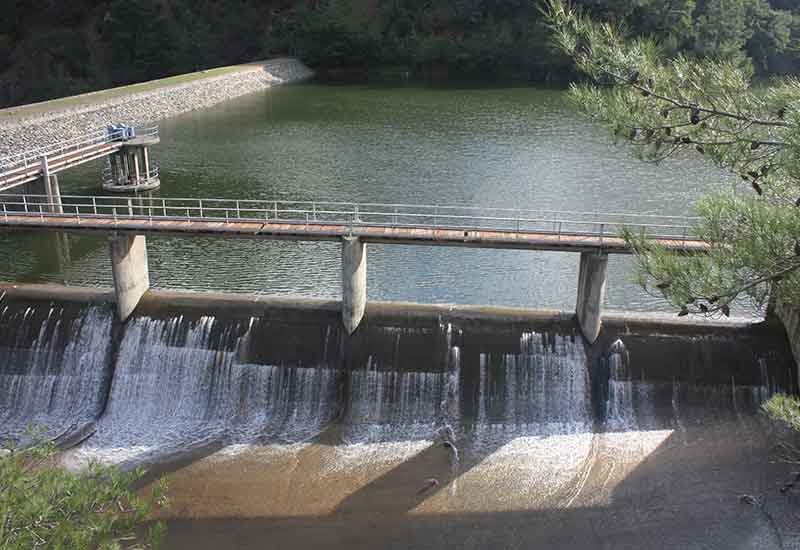
But there is an important distinction between having more water in the dams and being out of water stress. The latest figures show a major year-on-year improvement, while the government is still treating water scarcity as a serious issue and continuing to push water-saving measures.
So how much water is actually in Cyprus’s dams? Did the recent storms make a meaningful difference? Are we still officially suffering from drought or water scarcity? And, perhaps most importantly for everyday residents, can you use a hosepipe to wash your car?
Here is what the latest official information tells us.
Cyprus’s dams are currently about 41% full
The Water Development Department’s latest reservoir figures show that, as of 6 September 2026, Cyprus’s reservoirs held approximately 123.3 million cubic metres of water.
That represents 41.1% of the island’s combined reservoir capacity of 300.1 million cubic metres.
The national figure, however, hides substantial differences between individual reservoirs.
Cyprus’s largest dam, Kouris, is approximately 40% full, holding around 46.1 million cubic metres. Asprokremmos is around 39% full, while Evretou is about 44% full and Kannaviou around 48% full.
Some of the smaller reservoirs are doing considerably better. Kalopanagiotis is full, while Ayia Marina Chrysochous and Pomos are also at relatively high levels.
At the other end of the scale, several reservoirs remain seriously depleted. Kalavasos is around 24% full, Dipotamos approximately 32%, and Lefkara around 18%.
So while the national average is much healthier than it was a year ago, it would be wrong to assume that every dam is now comfortably supplied.
A huge improvement compared with September 2025
This is where the change becomes much clearer.
At the beginning of September 2025, Cyprus’s dams contained approximately 46.4 million cubic metres, representing just 15.5% of total capacity.
At the beginning of September 2026, the figure was around 117.9 million cubic metres, or 39.3% full.
That means Cyprus entered September with roughly 71.5 million cubic metres more stored water than it had a year earlier.
Using the latest figure of 123.3 million cubic metres on 6 September, the difference compared with the beginning of September 2025 is approximately 76.9 million cubic metres.
In percentage terms, reservoir storage has increased from 15.5% to 41.1% over the year.
That is a substantial recovery.
It is also worth remembering just how poor the starting point was. The government has described the recent period as one of serious pressure on Cyprus’s limited water resources, with drought and declining rainfall and runoff adding to the problem.
Did the August storms actually help the dams?
Yes, they appear to have done so.
Cyprus experienced severe thunderstorms and exceptionally heavy rainfall during the final days of August. Civil Defence issued warnings over the severe weather and the risk of flooding, while the Department of Meteorology recorded extraordinary rainfall totals for what is normally one of the island’s driest months.
Preliminary figures showed average rainfall across the government-controlled areas reaching approximately 30 millimetres during August, compared with a normal August average of just 2.9 millimetres.
That means August rainfall was more than ten times the normal amount.
The final days of the month were particularly wet, with approximately 22.5 millimetres falling during the final three days of August alone.
Some individual locations received dramatically more. Platania, for example, recorded almost 84 millimetres during August, compared with its normal August rainfall of around 13 millimetres.
There is also evidence that the rainfall translated into additional water stored in the reservoirs.
On 1 September, the dams were reported at approximately 117.9 million cubic metres, or 39.3% full.
By 6 September, the Water Development Department’s live figures showed approximately 123.3 million cubic metres, or 41.1% full.
That is an increase of around 5.4 million cubic metres in just five days.
It would therefore be wrong to say that the recent storms had no effect.
However, the government’s publicly available reservoir figures do not provide a simple breakdown showing exactly how much of that increase came from the August storms themselves. Reservoir storage can also change because of other inflows, transfers and operational factors.
The safest conclusion is that the exceptionally wet end to August provided a meaningful boost to reservoir storage.
It wasn’t just one wet weekend
There is another encouraging figure.
For the period from 1 October 2025 to the end of August 2026, cumulative rainfall in Cyprus reached approximately 608.3 millimetres, equivalent to around 122% of the normal amount for the corresponding period, according to preliminary Department of Meteorology figures.
That is important because reservoir recovery depends much more on the overall hydrological picture than on one isolated storm.
The improvement in Cyprus’s dams is therefore not simply the result of one exceptionally wet weekend. The 2025–26 hydrological year has, overall, delivered considerably more rainfall than the previous drought-affected period.
Are we still officially in drought?
This is where terminology becomes important.
The Cyprus government continues to describe the country as facing water scarcity and water shortages, and its official water policy continues to focus on managing limited supplies, reducing consumption and strengthening water security.
The government has not, however, simply declared that Cyprus is either “in a drought” or “out of a drought” based on the percentage of water currently sitting in the reservoirs.
Drought is a broader issue than dam levels alone. It can involve rainfall deficits, reduced inflows, depleted groundwater, soil moisture, agricultural impacts and the long-term availability of water.
The government’s current position is therefore best described as follows:
Cyprus has experienced a significant recovery in reservoir storage, but remains a water-stressed country and continues to face water-security pressures.
That is an important distinction. A much better reservoir level does not mean that the underlying problem has disappeared.
The government continues to identify drought, climate change, reduced rainfall and declining surface runoff as long-term threats to Cyprus’s water resources.
So, can you use a hosepipe?
For some people, this is likely to be the most useful part of the entire article.
Can I wash my car with a hose?
No.
The Water Development Department’s current official water-saving guidance specifically advises residents to wash cars using a bucket and sponge rather than a hose.
The current legal framework also provides for penalties for prohibited wasteful uses of water, including washing motor vehicles with a hose.
The government’s current extrajudicial-fine arrangements provide for a financial penalty for a first offence, with a higher penalty for repeat offences.
So if you were wondering whether the recent improvement in dam levels means you can get the hose out and wash the car, the answer is no.
Use a bucket and sponge instead.
What about cleaning the veranda or pavement?
Again, the government’s guidance is clear that hoses should not be used wastefully for this purpose. Sweeping and mopping are recommended alternatives.
What about watering the garden?
The government advises that when sprinklers are used, watering should be carried out early in the morning or late in the afternoon, when evaporation is lower.
The point is not that residents are expected to stop using water altogether. It is about reducing unnecessary waste while Cyprus remains under pressure.
Why save water when the dams are over 40% full?
Because 41% full is not the same as having a secure water supply.
More than half of Cyprus’s total reservoir capacity is still empty, and several individual dams remain at very low levels.
The government is therefore continuing to invest in alternatives to rainfall-dependent water supplies.
That includes desalination, reclaimed water, infrastructure improvements and measures aimed at reducing consumption and leakage.
The Water Development Department has also been distributing water-saving equipment, including tap aerators and shower-flow regulators, to help households reduce consumption.
The government has said that even a 10% reduction in national water consumption could save around 10 million cubic metres of water, which gives some idea of how significant relatively small changes in behaviour can become when applied across the island.
Cyprus is becoming less dependent on the dams
There is a bigger story behind the numbers.
For decades, Cyprus has relied heavily on rainfall and stored reservoir water, but climate change and increasingly unpredictable rainfall have made that approach more difficult.
Desalination is therefore becoming an increasingly important part of Cyprus’s long-term water strategy.
The government’s stated approach is to use desalinated water increasingly for drinking-water needs while preserving reservoir supplies, where possible, for agriculture.
That means the future of Cyprus’s water supply is unlikely to depend solely on whether the dams are full after the winter rains.
The bottom line
The latest figures are genuinely encouraging.
Cyprus has approximately 123.3 million cubic metres of water stored in its reservoirs, equivalent to 41.1% of total capacity.
A year earlier, the figure was only around 46.4 million cubic metres, or 15.5%.
That means the country now has roughly 77 million cubic metres more water stored in its dams than it did at the beginning of September 2025.
The recent storms also appear to have provided a useful additional boost, arriving at the end of an exceptionally wet August.
But the improvement should not be confused with the end of Cyprus’s water problem.
Several dams remain at low levels. The government continues to describe water scarcity as a significant issue, and conservation measures remain in place.
So the message from the figures is a positive one, but not a licence to waste water.
Cyprus’s dams have recovered dramatically compared with a year ago.
The August storms helped.
But Cyprus is still a water-stressed island — and the hosepipe stays in the garage when it comes to washing the car.
Official sources
Water Development Department (WDD) – Cyprus Dam Monitoring System
Water Development Department – Water Management and Water-Saving Measures
Cyprus Department of Meteorology – Rainfall and weather data
Cyprus Civil Defence – Severe weather and storm warnings
Government of the Republic of Cyprus – Water policy, water scarcity and water-security measures
Cyprus Government Gazette – Water conservation legislation and enforcement provisions