
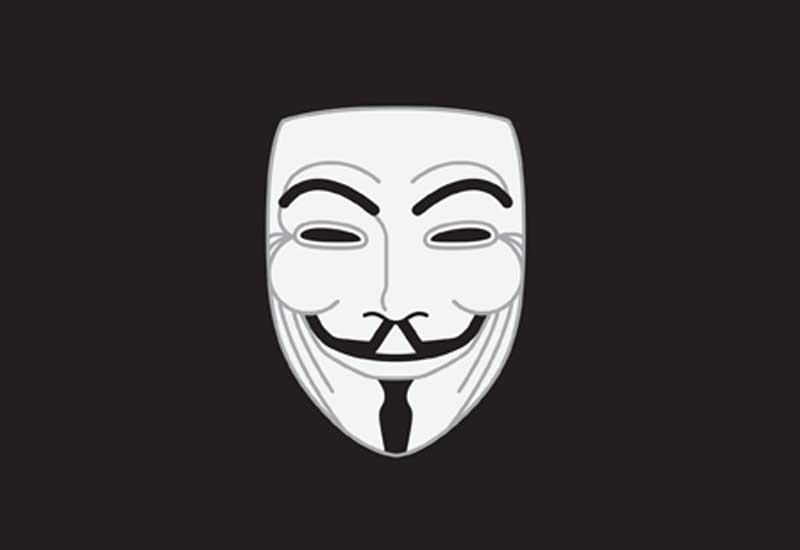
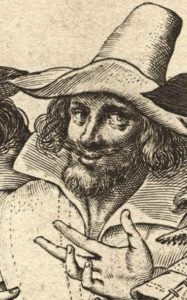

His name was not in fact Guy Fawkes, but Guido Fawkes. His picture is instantly recognizable, and Guido Fawkes masks are regularly worn by anti-government protesters as a symbol of their dislike of the British government, but in fact we have little idea if that is an accurate likeness. The original portrait of Fawkes (pictured) was in fact drawn by a foreigner who had never seen him. He relied on contemporary descriptions which say he had the long hair, mustache and small beard which were fashionable at the time.

When James I came to the throne in 1603, Catholics hoped he might relax the laws- after all James’ own wife was a Catholic as had been his mother. James, although personally inclined to be tolerant, was persuaded not to by his Chief Minister, Robert Cecil.
A group of Catholics, led by Robert Catesby who had taken part in an earlier conspiracy against Elizabeth I, decided that they had no choice but to assassinate the King. Aware that this alone would change little, they decided to blow up the House of Lords with Gunpowder on the one day that the Royal Family, Commons and Lords all met together in the same Hall- the State Opening of Parliament. They would be acting on their own- Spain, the leading Catholic power, refused to help. The plotters were able to rent the cellar under Westminster Hall and started moving barrels of gunpowder there. They needed someone willing to light the fuse at the right time. Fawkes volunteered, although he knew he would probably be killed himself.
In modern terms, here were a group of Religious extremists willing to commit a terrible act of terrorism for their cause. And Fawkes, having been thoroughly radicalised as a young man, volunteered to become Britain’s first ever suicide bomber, confident he would go to Heaven as his reward. Today we are depressingly familiar with the scenario, and the fact that we now enjoy Bonfire Night and its rituals should not disguise how close the plot came to success. Recent scientific tests have shown that the gunpowder, even if some of it was decayed and did not explode, would certainly have been enough to kill everyone in Westminster Hall.
But the plot was of course discovered. Robert Cecil had agents and double-agents throughout the country and Europe keeping him informed of what Catholics were up to. How much Cecil knew of the plot in advance is uncertain. He may have known about it for months and allowed it to “mature” until the last minute, so as to increase his power when he arrested the men “in the nick of time”, or perhaps he really was caught by surprise as he claimed at the time.


It was good fortune and the disastrous breach of security by whoever wrote the letter that saved people from what could have been Britain’s 9/11. Enjoy your fireworks.