
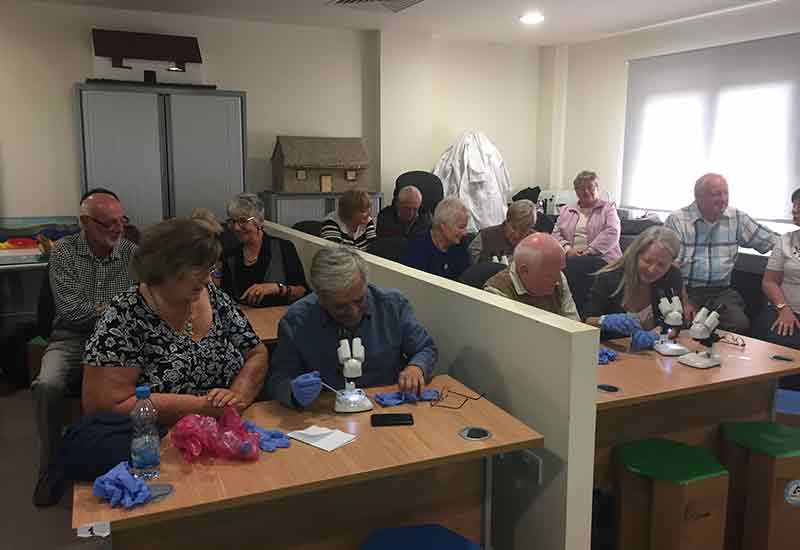
An Environmental Group has been formed, under the leadership of the Cyprus Third Age Limassol Branch (C3A).
We all love the island we have chosen to live on, and want to see the most being made of its rich environment, from the sea to the mountains; from the air we breathe to the water we drink; from the rich flora to the varied bird, reptile and insect life. We also recognise that the environment here is under threat from over-development, pollution and to the effects of exploitation of natural resources.
The first meeting, held in October, was a very interesting presentation by Melina Marcou of Department of Fisheries and Marine Research, on the topic of “The development of a network of Marine Protected Areas (MPAs) of Cyprus”. This included Natura 2000 sites, protected species and habitats and the formation of artificial reefs.
The second meeting, held on 4th December was entitled “Flying Things – Beautiful and Not So Lovely!” We were treated to two fascinating presentations on very contrasting insects – mosquitoes and butterflies.
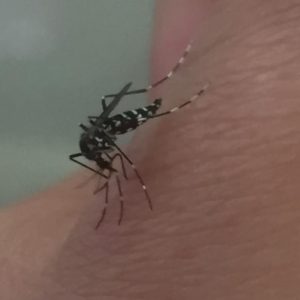

Amongst the over 3500 species of mosquito, today’s big baddie is the Asian tiger mosquito (so-called because of its striped appearance). As we know, mosquitoes bite us (and other animals and birds) for our blood. In doing so, they can transmit diseases. Six new species of mosquitoes have been brought into Europe since 1990. The Asian tiger mosquito carries a number of nasty diseases. There is also the Yellow fever mosquito which looks similar to the Asian tiger and it is the main cause of yellow fever as well as Zika. The authorities have early warning systems in place around the airports, ports and early warning, rapid-response teams and, so far, there have been no records of this unwanted insect on our island.
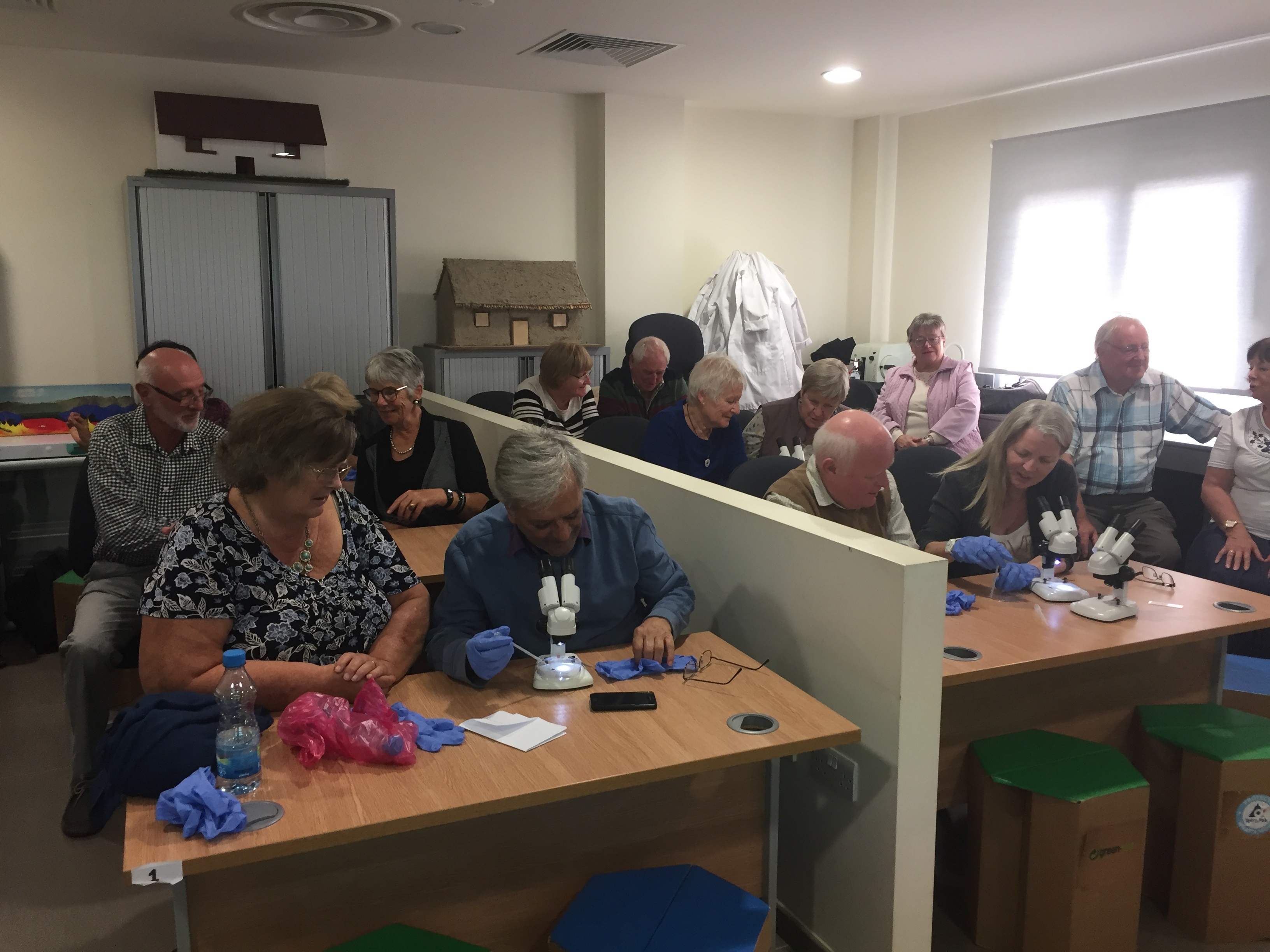
We were then given the opportunity to view mosquito larvae under the microscope before the presentation ended with a Q&A session.

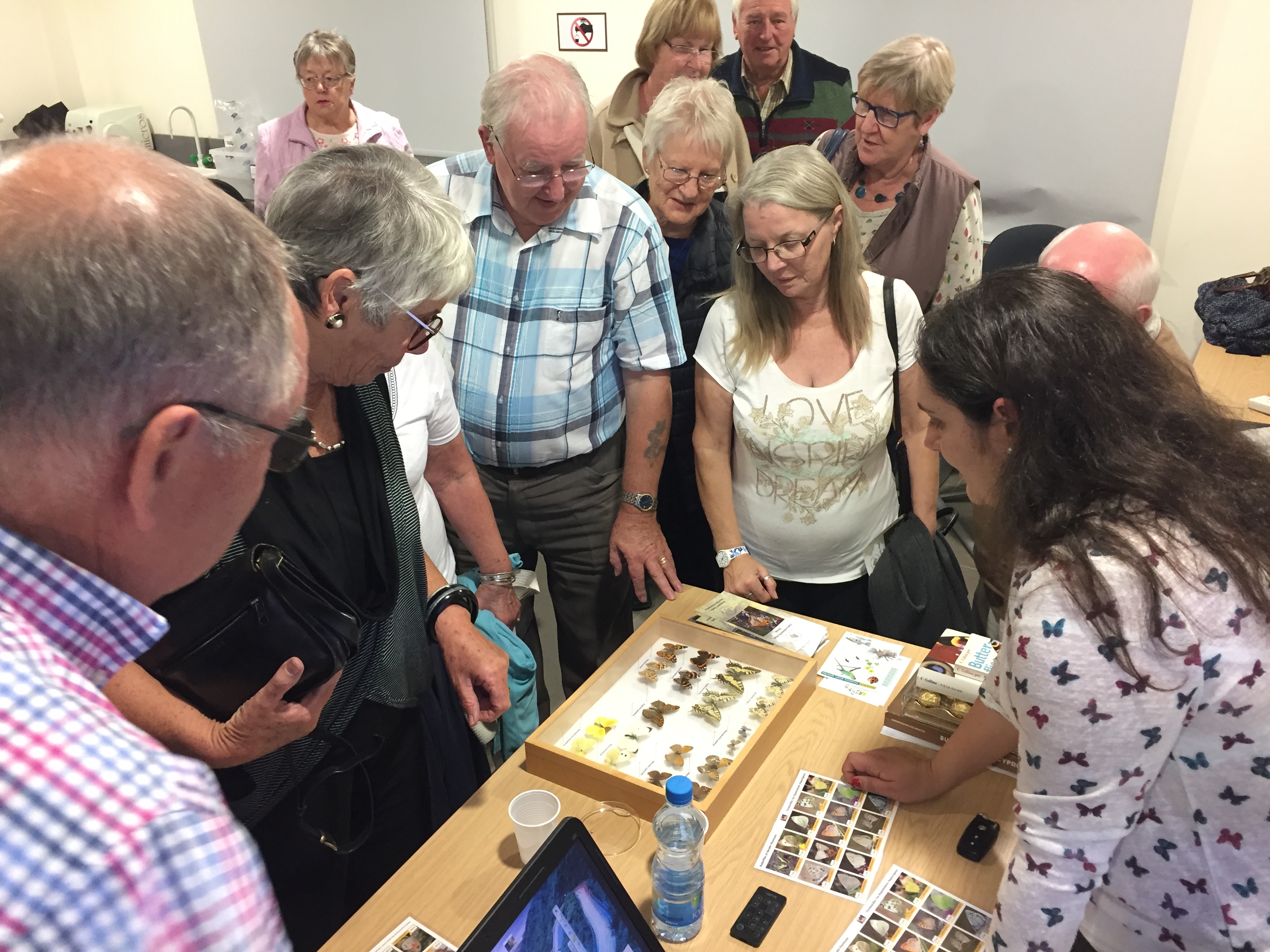
Elli explained the main differences between butterflies and moths (the antenae and the way they fold their wings. Some butterflies only have one host plant where they lay their eggs while others have many. The Akrotiri Pensinsula has at least 30 species and the Akrotiri Environmental & Education Centre has a laminated sheet providing visual and written explanations about them.
The endemic butterflies, including their habitats, breeding habits and ranges were explained. Elli then showed slides of some of the migrating species, including Vanessa atalanta (the Red Admiral), Danaus chrysippus (the African monarch) and Vanessa cardui (the Painted Lady). Apparently, there are no common names for butterflies in Cyprus and a member of the audience suggested this might be a good idea to involve schoolchildren in coming up with names in Greek.
The C3A Environmental Group meets on a monthly basis on the 4th Monday of the month at 2pm at the Akrotiri Environmental & Education Centre.
Further information on future talks for this group and a comprehensive list of C3A groups, can be obtained from the C3A webpage.